
 &
& 


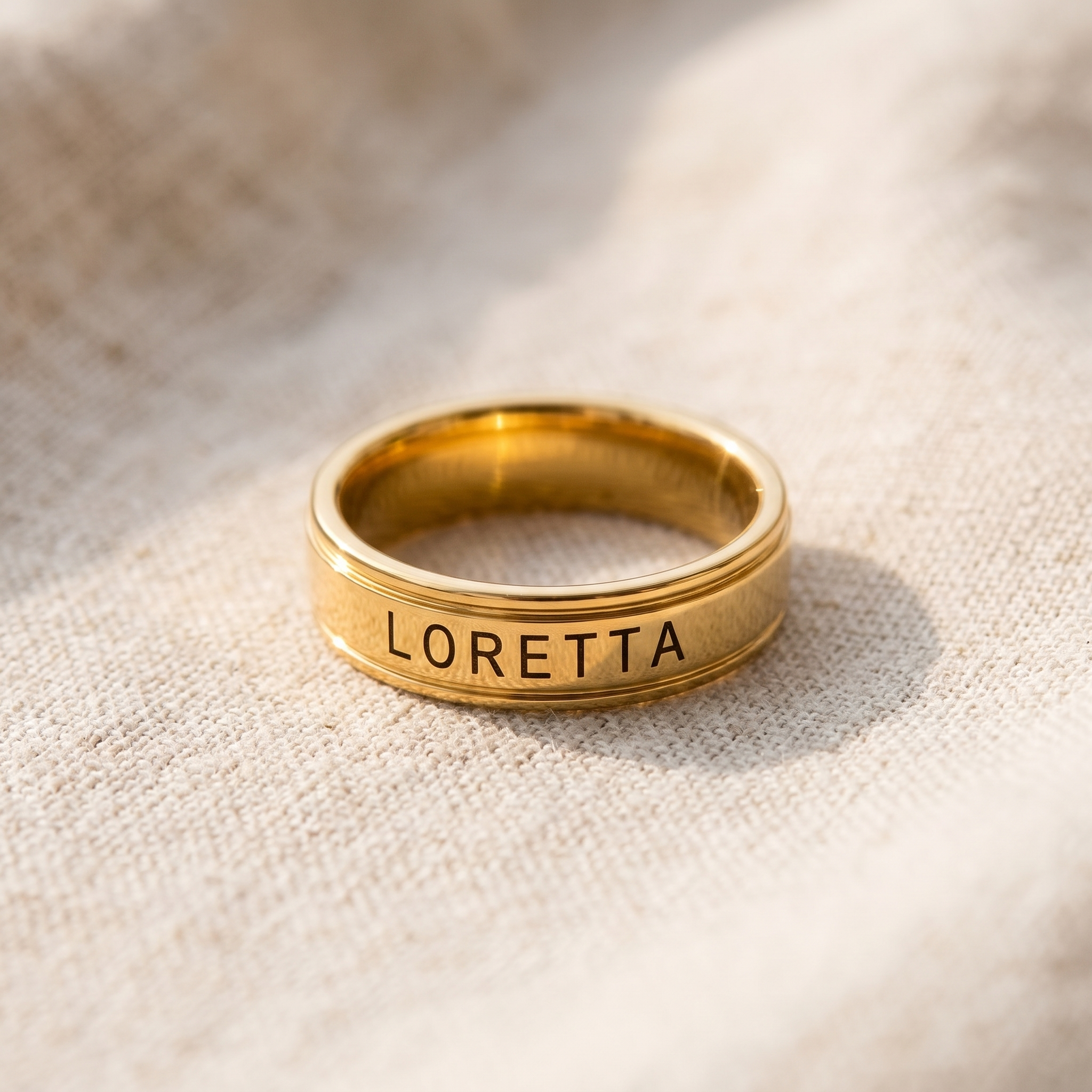
Almost every way of personalising a wedding ring happens on the inside of the band, where only the wearer knows it is there. That is the appeal and also the constraint: a band's inner surface is narrow, so what you engrave has to be short enough to stay legible for the next forty years.
What can go inside a wedding band?
- The wedding date - the most engraved thing in the world, and the one nobody regrets
- Both names or initials - each ring carrying the other person's
- Coordinates - of the venue, or of where you met
- A few words in their handwriting - reproduced as written rather than reset in a typeface
- Roman numerals - a date rendered so it reads as pattern rather than data
- A single word - the one you both use, which needs no explanation
How much actually fits on a band?
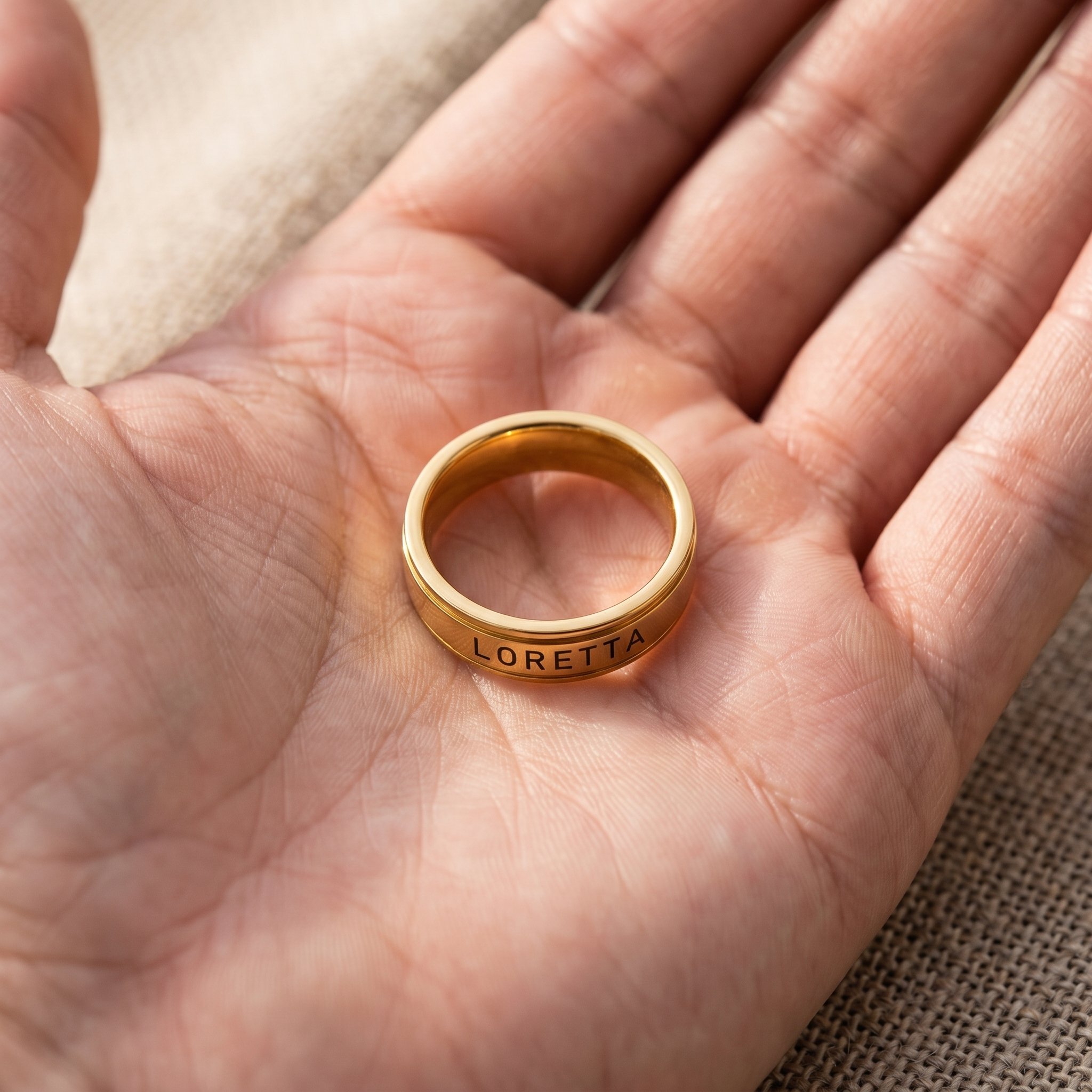
Less than the sentence you have in mind. Engraving is scaled to the surface, so a longer inscription is set smaller and reads less clearly as the years go on. A date, two names, or three or four words sit comfortably on most bands. A full line of a vow does not, and the smaller it is set the sooner it becomes illegible. On a slim 3mm band such as a personalised band ring, treat a date or a short phrase as the sensible maximum.
What about outside the band?
Outside engraving is a different decision, because it is public. Names cut through the band, as on a double name ring, are a statement rather than a secret; a plain outer surface with everything inside is the more traditional route. Some couples do both: a plain outer band, a date inside, and a separate personalised ring worn alongside rather than instead.
What should you avoid engraving?
- A long quotation - set tiny, read never, and often no longer feels like yours
- A year with no month - ambiguous within a decade
- Text in a language you cannot proofread - it is cut exactly as entered
- Anything that assumes a name will not change - initials outlast surnames
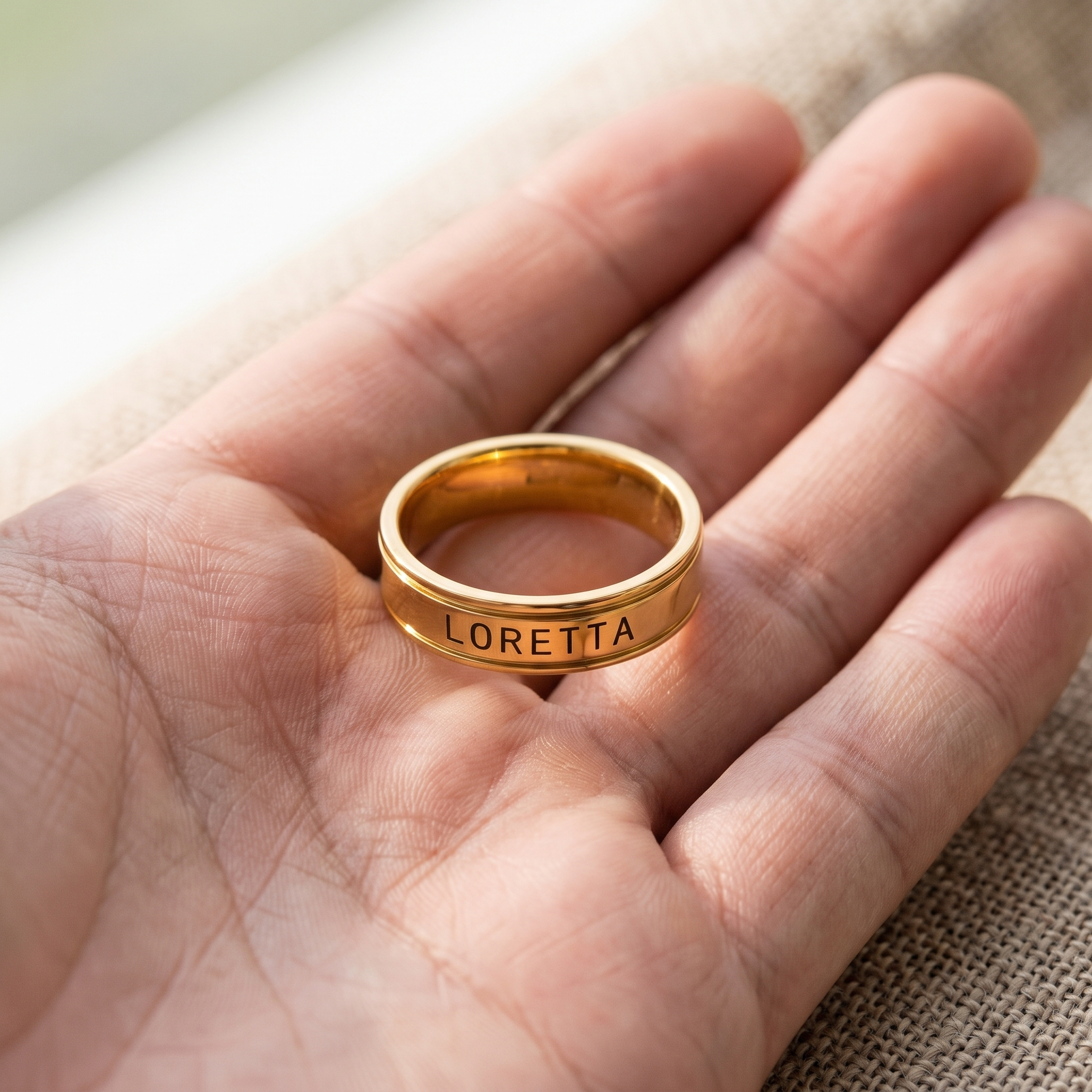
Read the wording aloud before ordering. Engraving is permanent, and it is reproduced exactly as you type it, spacing and punctuation included.
Why does the metal matter on a ring worn permanently?
Belle Fever uses Monel Silver, Moneil Gold and Moneil Rose Gold, waterproof and tarnish-resistant tones at a minimum 1.5mm thickness with deep laser engraving cut into the metal rather than marked on its surface. That is what keeps an inscription legible after years of daily handling.
That matters more on a wedding band than on anything else in a jewellery box, because it is the one piece that is never taken off. A plain band in a tarnish-resistant tone stays as it was on the day.
Frequently asked questions
What is the most common wedding ring engraving?
The wedding date, followed by the partner's name or initials. Both are short enough to stay legible and specific enough to still mean something decades later, which is why they outlast more inventive choices.
How many characters fit inside a wedding band?
It depends on the band width rather than a fixed count, because the text is scaled to the surface. A date, two initials or three or four short words fit comfortably on most bands. A full sentence needs a wide band and is set small.
Can I engrave handwriting on a ring?
On the designs made for it, yes, reproduced as written rather than reset in a typeface. Short is essential here, since handwriting takes more space than a typeface at the same legibility.
Should the engraving go inside or outside?
Inside for anything private, which is most things. Outside only when you want it read by other people, which turns the ring into a statement piece rather than a wedding band with a secret.
Can an engraving be added later?
Ask before assuming. Engraving after a ring has been made and worn is a different job to engraving one during production, so if you know you want an inscription it is far simpler to specify it at the time of order.
