
 &
& 


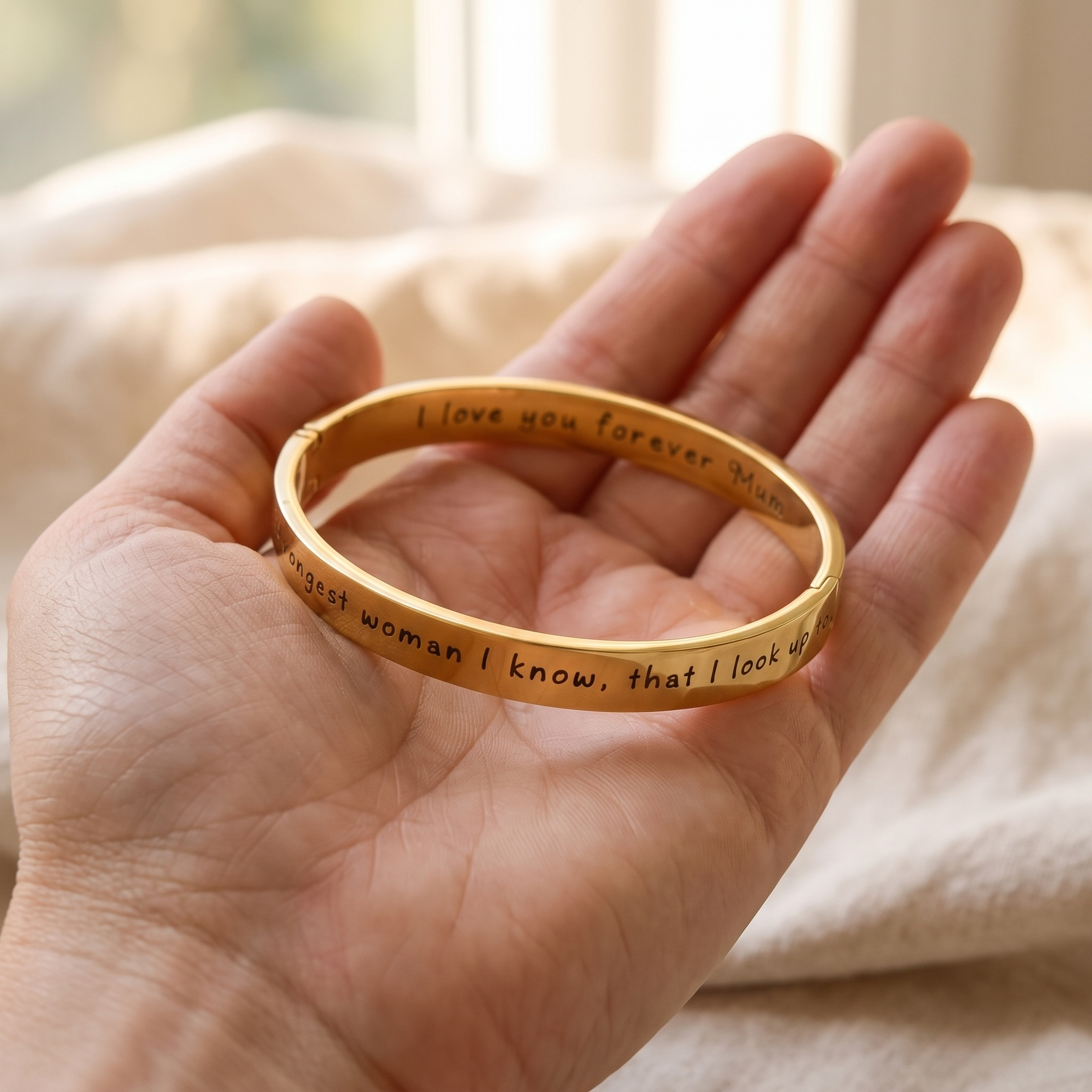
The quiet test of a piece of jewellery is whether it comes off at night. Anything that does eventually stays off, because the routine of putting it back on every morning is one nobody keeps for long. Pieces that never come off are the ones that end up meaning something, and that is a durability question before it is a sentimental one.
What does taking a piece off actually cost?
- It gets worn less - a piece removed nightly is worn a fraction as often as one that stays on
- It gets lost - most jewellery is lost off the body, on a hotel basin or a gym bench
- The meaning fades - a memorial or milestone piece works by being encountered without deciding to
- It becomes an occasion item - which is how a keepsake ends up in a drawer
What makes a piece safe to leave on?
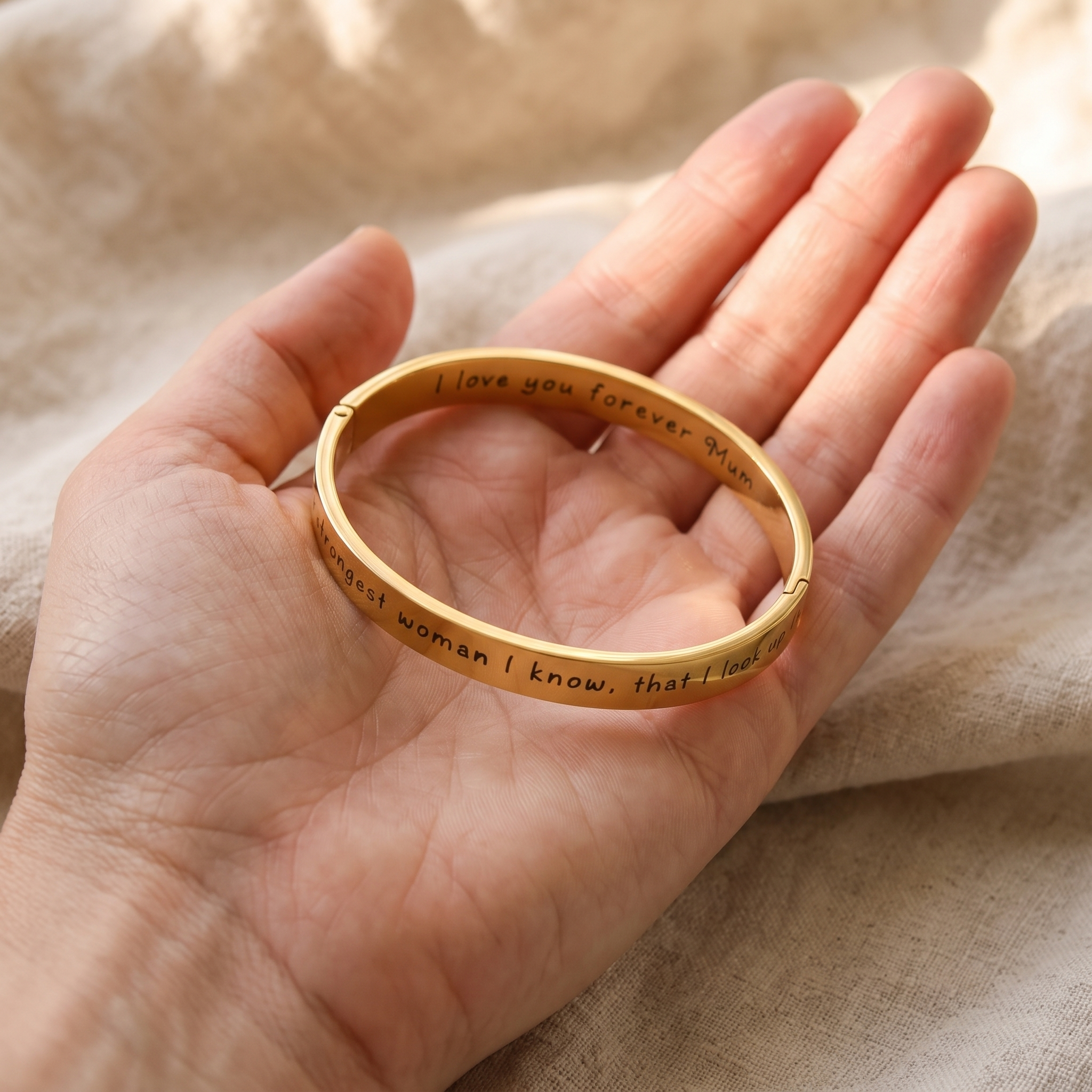
A waterproof, tarnish-resistant finish, so showers, swimming and washing up require no thought. Enough thickness that knocks do not deform it. A secure fastening, because a clasp that opens is the reason people take things off as a precaution. And a shape without fine catches that snag on clothing.
Belle Fever uses Monel Silver, Moneil Gold and Moneil Rose Gold, waterproof and tarnish-resistant tones at a minimum 1.5mm thickness with deep laser engraving cut into the metal rather than marked on its surface. That is what keeps an inscription legible after years of daily handling.
A locking promise bangle is the clearest example: the clasp locks, so it can be put on once and genuinely left.
Which pieces are built for it?
- Locking bangles - a clasp that stays shut, sized by diameter to sit properly
- Slim engraved bands - nothing to catch, nothing to open
- Solid pendants on a secure chain - a plain shape rather than a fine cut-out
- Silicone-band ID bracelets - built for training and manual work
- Open cuff bangles - no clasp at all, which removes the failure point entirely
A solid engraved pendant is a better never-take-it-off piece than a delicate cut-out design, simply because there is less to catch.
What is the whole maintenance routine?
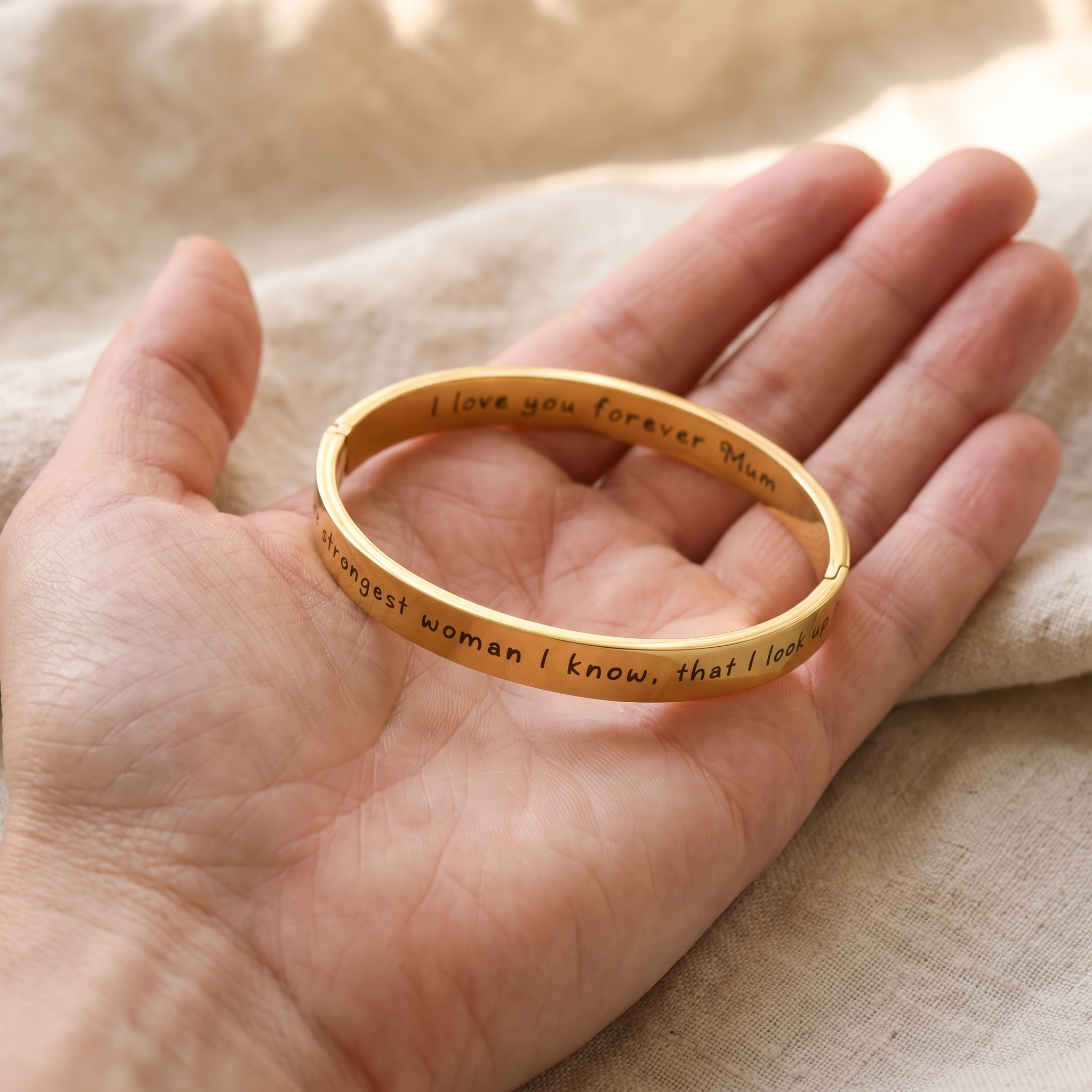
Rinse and dry after chlorine or salt water. Put jewellery on after perfume and hand cream rather than before. Buff with a soft dry cloth when it looks dull. That is all of it. No polishing, no dips, nothing abrasive, and nothing that requires remembering.
Frequently asked questions
Can I sleep and shower in Belle Fever jewellery?
Yes. Monel Silver, Moneil Gold and Moneil Rose Gold are waterproof and tarnish-resistant and are made for continuous wear. Rinse and dry after chlorine or salt water to keep the finish bright.
Which piece is best if I never want to take it off?
A locking bangle or an open cuff, because neither has a clasp that can work loose, or a slim engraved band, which has nothing to catch. Solid pendants are better than fine cut-out designs for the same reason.
Will constant wear damage the engraving?
No. Deep laser engraving cuts into the metal rather than marking the surface, on pieces a minimum 1.5mm thick, so handling does not wear it away. What dulls contrast is polish residue, which a soft brush lifts out.
Should I take off a cremation piece to swim?
Many people do, not because the metal minds but because the closure is the one part that could work loose. Check it is firm before wearing and again after a few days, and take it off for swimming if that reassures you.
Does jewellery worn constantly need more cleaning?
Slightly. A dry buff whenever it looks dull, and a wash with warm water and plain soap every month or two. That is the whole routine, and nothing abrasive should ever be used on an engraved piece.
